Garden Clearance in Hoxton
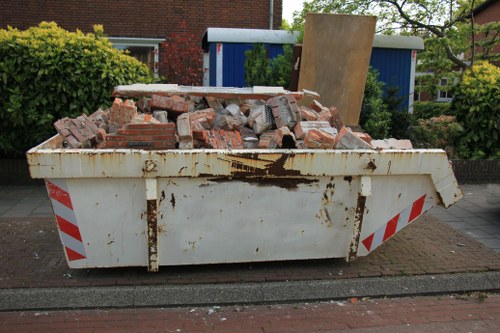
Garden clearance in Hoxton should make outdoor space usable again without turning the work into a drawn-out project. We clear away green waste, broken garden materials, old pots, branches, soil, timber and general outdoor clutter, then separate what can be reused or recycled from what needs disposal. The result is a tidier garden, yard, courtyard or shared outdoor area that is easier to keep in order and simpler to plan around for future work.
Our service suits regular tidy-ups as well as heavier clearances after pruning, landscaping or long periods of neglect. We can handle mixed garden waste alongside items such as fencing offcuts, plant supports and dismantled shed contents, provided the load is safe and suitable for removal. If you need a larger mixed clearance, our waste removal service can be used for a broader range of non-hazardous materials, while the garden-specific option keeps the focus on outdoor waste and practical separation.
Use this page to understand how the service works, what is usually included and which parts of a garden clearance job affect the final scope. Tell us what needs clearing, whether the waste is stacked, bagged or spread out, and whether access is through a side passage, shared path or rear entrance. A short note about the amount of material helps us prepare a sensible quotation. If you already know you need a garden-specific clearance, make that the starting point for your enquiry.
Garden waste and outdoor clutter cleared with care
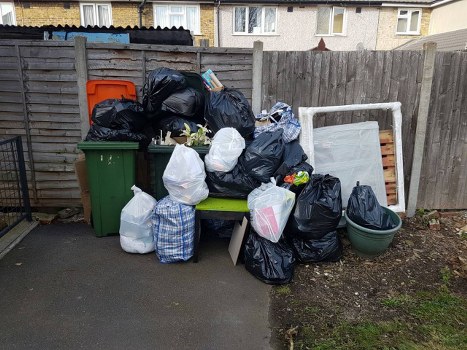
Garden waste comes in many forms, and a good clearance depends on sorting those forms correctly. Green material such as cuttings, grass, leaves and small branches can usually be handled separately from hard items like broken planters, old edging, cracked paving pieces or timber from sleepers and trellis work. By keeping the load organised, we can plan the collection in a way that is more straightforward for you and better suited to recycling routes where they are appropriate.
Hoxton properties often include compact gardens, terraces, roof-level spaces and courtyards where access is tight and storage is limited. That means a clearance is often less about bulk alone and more about working carefully around paving, planted borders, steps and narrow routes. Protecting the remaining garden matters as much as removing the unwanted material, especially where there are fragile surfaces or items that should stay in place. The task may also involve moving waste from the garden to the vehicle in stages rather than all at once.
Where the job includes mixed outdoor contents, we can deal with items from a range of related clearance categories. For example, our garden clearance page covers the core outdoor service, while furniture clearance may be useful where the garden contains seating, tables or other exterior furnishings that are no longer needed. When the space includes a mix of domestic and outdoor items, choosing the right scope helps avoid confusion and keeps the quotation accurate.
What we remove from gardens and yards

Many customers need help with more than leaves and grass cuttings. A proper garden clearance can include old compost bags, broken storage tubs, weathered timber, disassembled raised beds, plant pots, rotted fencing sections, damaged outdoor furniture and general clutter left after a season of use. If the area has become difficult to navigate, the work may also involve moving items from behind sheds, under benches or from corners where waste has built up gradually over time.
Some clearances are linked to wider property work. A garden may be cleared before a sale, after tenants leave, before landscaping begins or after pruning creates more material than a household can easily dispose of. In those cases, the aim is not only to remove waste but also to leave the area ready for the next stage. If the job extends beyond the garden itself, our home clearance and house clearance services can be relevant for items inside the property that sit alongside the outdoor work.
Because every outdoor space is different, the work can be scaled to suit a small courtyard or a larger shared garden. A typical quotation depends on how much material needs loading, whether items are already gathered, and whether any heavier pieces need breaking down before removal. Clear access and a simple description of the waste usually make it easier to plan the job properly, but the service itself remains focused on clearing the space and dealing with the material in a sensible way.
For overgrown spaces, seasonal tidy-ups and leftover materials
Not every garden clearance begins with a full overgrowth problem, but some do. Spaces that have not been used for a while may contain a mix of fallen branches, damp leaves, loose soil, broken containers and general debris that has gathered after weather changes or unfinished work. The clearance then becomes a practical reset, removing material that prevents the space from being used, inspected or improved. We approach that kind of work as a clear-out rather than a gardening task, so the emphasis stays on removal and disposal.
Seasonal tidy-ups are another common reason for a garden clearance. After pruning, light maintenance or a period of gardening projects, waste can quickly take up more room than expected. That includes bundled cuttings, old compost, torn bags, plant supports and the remains of temporary coverings or protective materials. When suitable, we can include recyclable garden materials in the right stream and separate them from general waste. For larger outdoor collections that are not limited to plant matter, a builders waste clearance may be relevant if the area also contains rubble, timber offcuts or demolition debris from garden works.
Useful preparation is straightforward. If you can gather similar items together, keep pathways clear enough for access and note any awkward features such as locked side gates, narrow steps or shared entries, the quotation can be prepared more accurately. You do not need to sort every last item in advance. A brief list and a few photographs are often enough to show the size of the load, though a clear description works too when pictures are not convenient.
How the clearance is planned and priced

Pricing for garden clearance is usually shaped by the amount of waste, the type of material and the effort involved in moving it from the garden to the collection point. Dense or heavy waste takes longer to load than light cuttings, and awkward access can add time even when the pile itself is not large. If items need dismantling first, that is part of the practical scope as well. A sensible quotation should therefore reflect the work required rather than relying on a rough guess.
When a garden contains a mixture of waste types, it helps to be clear about what stays and what goes. For example, you may want to keep planters, ornaments or certain pieces of timber while clearing the rest. That distinction matters because the load should be assessed on what is actually being removed. If you are comparing related services, our flat clearance and garage clearance pages cover other property spaces where mixed items may need taking away, but the garden job itself stays centred on outdoor materials and access.
Two details are especially useful when asking for a quotation: the approximate amount of waste and the access route. If the clearance is straightforward, a concise explanation may be enough. If there are several piles, a shed to empty or a long carry to the vehicle, say so in advance. That allows the scope to be set sensibly. If you are ready to move ahead, contact us for a quotation based on the garden clearance you need.
Related clearance options for adjoining spaces
Many outdoor clearances sit alongside work in attached rooms, lofts, garages or offices, especially when a property is being reorganised. In those cases, it can be practical to deal with the outdoor waste and the indoor clutter in a joined-up way, rather than booking separate visits without checking how the areas connect. Our loft clearance and office clearance pages cover different parts of that wider process, while the garden service remains the right choice for material stored or abandoned outside.
Some customers also need help removing awkward household items that have been moved into the garden for temporary storage. Broken chairs, worn tables, old shelving or redundant storage units can end up outdoors and become part of the same clearance. In those situations, the job should be described honestly as a mixed load so that the right vehicle, labour and sorting approach can be planned. Where furniture forms a substantial part of the waste, our furniture disposal page may be more suitable for the items that are no longer wanted.
The most useful approach is to think in terms of the actual work to be done, not simply the room or surface where the waste is sitting. If the material is in the garden, on a terrace, by a shed or in a rear access space, the service should be described clearly so that nothing important is overlooked. Practical detail always beats vague labels, especially when the final quotation depends on the type of waste and the route it must travel to leave the property.
About Hoxton
Hoxton is an area in the London Borough of Hackney, immediately north of the City of London, with Shoreditch to the west and Haggerston to the east. Its name has long been associated with the medieval village that grew along the old road from Bishopsgate and later became absorbed into the expanding city. The area now combines residential streets, commercial frontages, cultural venues and pockets of older housing, creating a dense urban landscape that still carries traces of its historic layout. Hoxton Street is one of the best-known local thoroughfares, and the surroundings include a mix of converted warehouses, newer developments and surviving period buildings that reflect different phases of London’s growth.
Outdoor clearance for changing property needs

A garden clearance can be a one-off task or part of a larger change in how a property is used. Some people need to clear a garden before landscaping, while others want to remove longstanding clutter so that the space can be used more simply day to day. The service is flexible enough to suit either situation, provided the waste is described clearly and the access route is workable. We can then plan the collection around the volume and type of material rather than forcing it into a one-size-fits-all approach.
For properties where the outdoor area is closely connected to the rest of the building, it can help to think about the whole clearance picture. A rear yard, shared passage or basement entrance may affect how items are moved, and a mixed load may include materials better suited to different disposal routes. That is why the quotation process benefits from straightforward information rather than guesswork. If you also need general non-garden items removed from the same property, our furniture clearance page offers another useful point of reference for separating household pieces from garden waste.
If you are ready to clear the space, the next step is simple: tell us what is there, where it is located and how much of it needs to go. We can then shape a quotation around the actual job in front of you. For a straightforward request, ask for a quote today and we will take it from there.
Making the work straightforward on the day
Most garden clearances run more smoothly when the waste is easy to identify and the route out of the property is unobstructed. You do not need to prepare the area perfectly, but it does help if gates can be opened, parked vehicles do not block the access point and any items you want to keep are clearly separated from those going. That makes the collection more efficient and reduces the chance of misunderstandings about what should be removed.
Where a clearance involves heavier or more awkward material, it can be worth noting that in advance so the job can be planned appropriately. Old soil, broken timber, wet green waste and dismantled outdoor structures are all handled differently, even though they may be leaving the same garden. If the issue is larger than one outdoor area, a broader property clear-out may be involved. In those cases, our furniture disposal and business waste removal pages can be useful for understanding other removal options that may sit alongside the garden work.
The main aim is to leave the outdoor space ready for its next use. That might mean a clean start for planting, a tidier courtyard, or simply the removal of accumulated material that has become hard to manage. If that is the outcome you want, a clear quotation begins with a clear description. Send the details when you are ready, and we will prepare the garden clearance around the scope you have given.
Recycling, sorting and the final collection step
Once the waste has been collected from the garden, the next step is deciding what can be directed to appropriate recycling or disposal routes. Green waste, timber, metal, plastic and mixed loads do not all follow the same path, so the initial sorting matters. A careful collection is therefore not only about lifting and loading but also about making sure the material leaves the property in an organised way that suits the type of waste involved.
Different gardens produce different kinds of waste. A long-neglected border might generate mostly green waste, while a tidying project around a shed or patio may produce hard materials, fixtures and household pieces. When there are several categories in the same job, it is often useful to mention them together so the clearance is planned properly from the start. If you are comparing similar services, the recycling and sustainability page sets out another part of the wider disposal picture, while the garden clearance remains focused on the removal itself.
That final collection step is where a tidy garden becomes useful again. Once the waste is gone, the remaining area is easier to assess, sweep, prune or redesign. In many cases, the practical value of the service lies in removing the awkward middle stage between “too much clutter†and “ready to useâ€. If that is where your project stands, a careful quote for the work is the right place to begin.
Requesting a quotation for your garden clearance
A quotation should be based on the real work involved, not on assumptions about the size of the garden or the type of property. If you are contacting us about a Hoxton garden clearance, the most helpful details are the approximate volume of waste, the kind of materials involved and any access issues that might affect loading. If there are items to keep, say so clearly. If the waste is in several areas, mention that too. Simple information is enough to start the process.
You can also explain whether the clearance is linked to another job, such as a tidy-up before decoration, a garden reset after maintenance or the removal of items left behind after a move. That context helps define the scope without turning the service into something more complicated than it needs to be. When the outdoor waste is the main issue, the garden clearance should stay the focus, with any related items discussed as part of the same enquiry rather than left to guesswork.
For the clearest next step, send the details and ask for a quotation. If you want a broader property service at the same time, mention that in the same message so the work can be considered together. Request your quotation when you are ready and we will help you move the garden clearance forward.